Acclimatizing in Dingboche
(October 5, 2016)
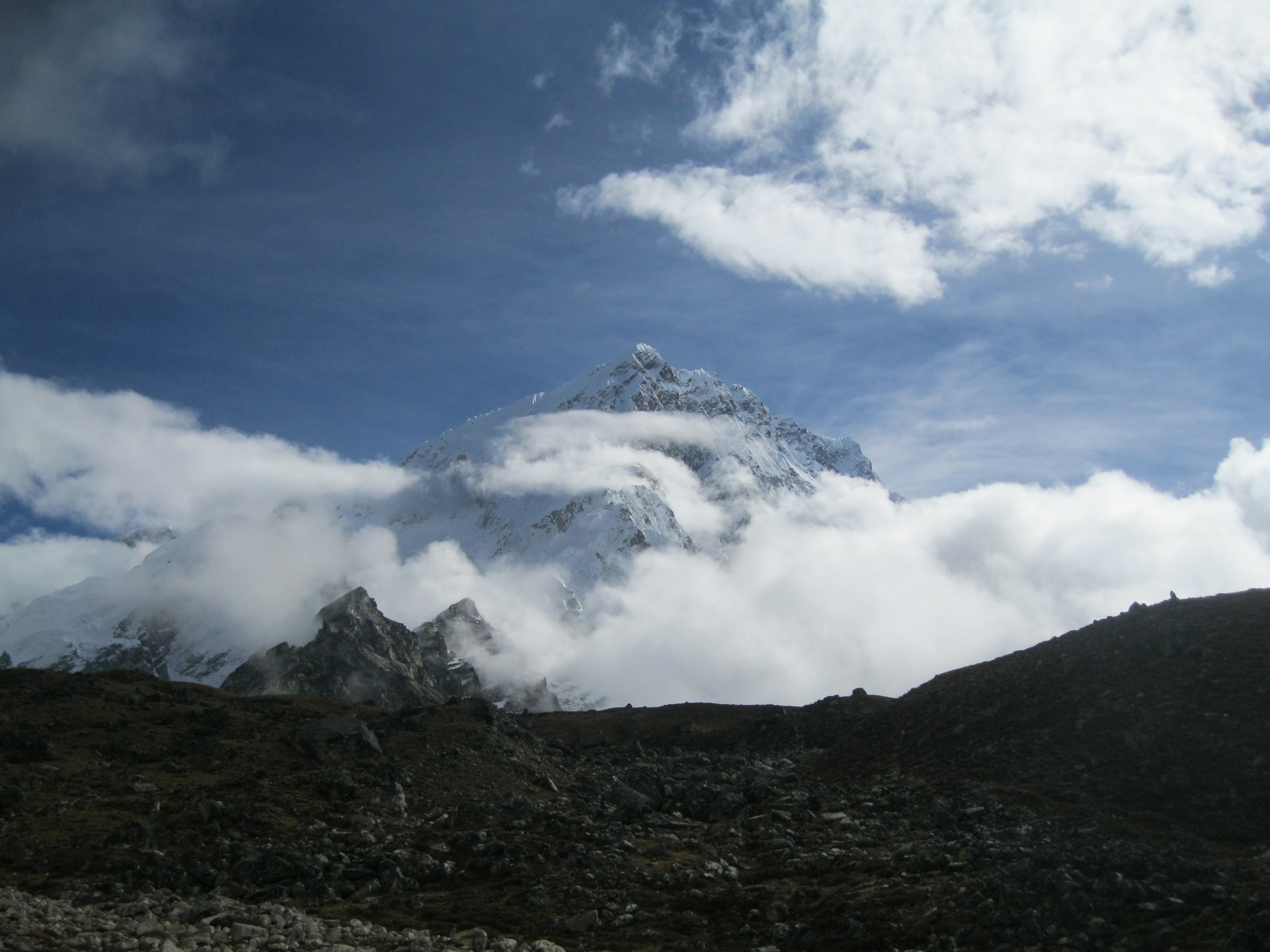
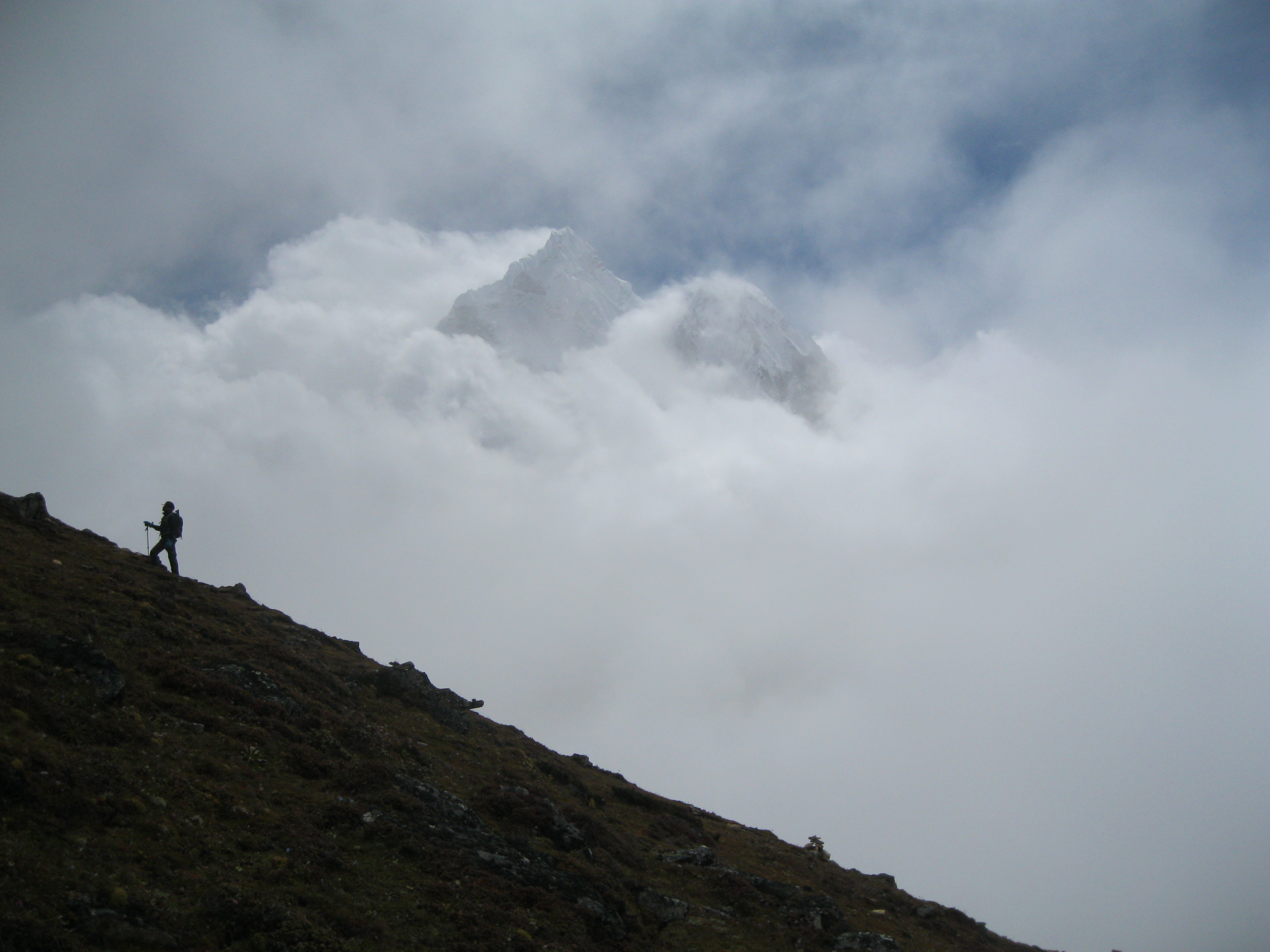
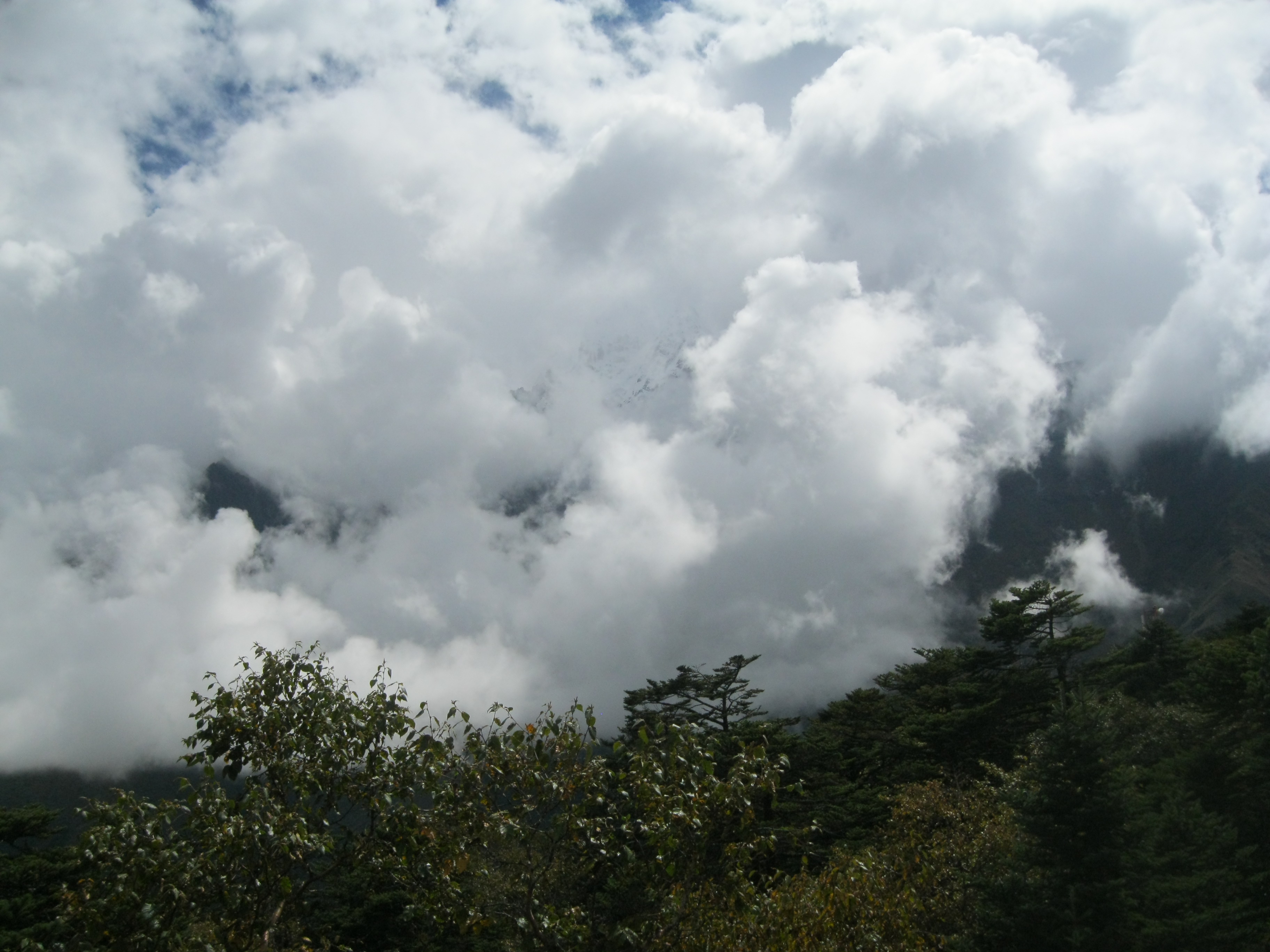
We hiked through thin air and dense fog. Intermittently, the sun pushed the clouds away to reveal a majestic mountain peak for a fleeting moment. Everything inside of me was breathing — my stomach, my eyes, the blood in my head. We climbed to 5,100 meters, taking baby steps up the mountain with little oxygen.
When we returned to the teahouse, I just lay back in the sun and let it burn my headache away to a dull, functional throb. The cure for an altitude headache is to lie in the sun and wind until it dissipates. It may take 2 cups of masala tea, two pieces of buttered toast as well. Tomorrow 5,100 meters.
Feeling the Altitude in Second-person
(October 6, 2016)
As you approach your destination, your head starts to throb, and you place one foot in front of the other with every effort you can—baby stepping it but slower. Then you go inside and you’re not sure what to do, so you take ibuprofen and sit outside to will away the headache. Then you can stumble back inside and sit still, still, still, and close your eyes, willing the oxygen back into your blood.
You go to take a piss in a hole in the ground that smells like an everyone-who-has-passed-through-here piss, and you can’t squat because your knees are too stiff. Your piss hits everything but the hole, mostly your shoes and socks. Since your ass is so high in the air, your piss trickles down your thermal underwear. You decide that today will be the day that you throw away the underwear that you have been wearing since Namche Bazar, where you had your last shower and changed your first pair.
You get your sleeping bag and wrap your damp, sweaty and piss-laden body in it as if it might actually help get you warm. You force yourself to order potato soup because if you have another cup of garlic soup, you will die. You realize that the grey liquid floating in the bowl in front of you is garlic broth with some uncooked potatoes in the bottom, and you cannot eat it because as the oxygen tries to creep back into your bloodstream, it makes you want to vomit everything else out of your system.
You lean your head back against the window and fold into a semiconscious state. You open one eye and it doesn’t seem so bad, and by the time you open the other you start to hear someone talking about horses, so you join in realizing that you can talk now and it makes you feel better.
You realize that the sky is blue, and if you go outside, you might glimpse a towering mountain peak. But that would mean putting on your shoes, which are all the way on the floor near your feet. You remind yourself that you should drink water by the liter-full, but you pack is over there and you cannot ask anyone to bring it to you because they cannot move either. So you do it, you drag your soggy backpack toward you and perch it on the bench closest to the light and take a sip, then rest.
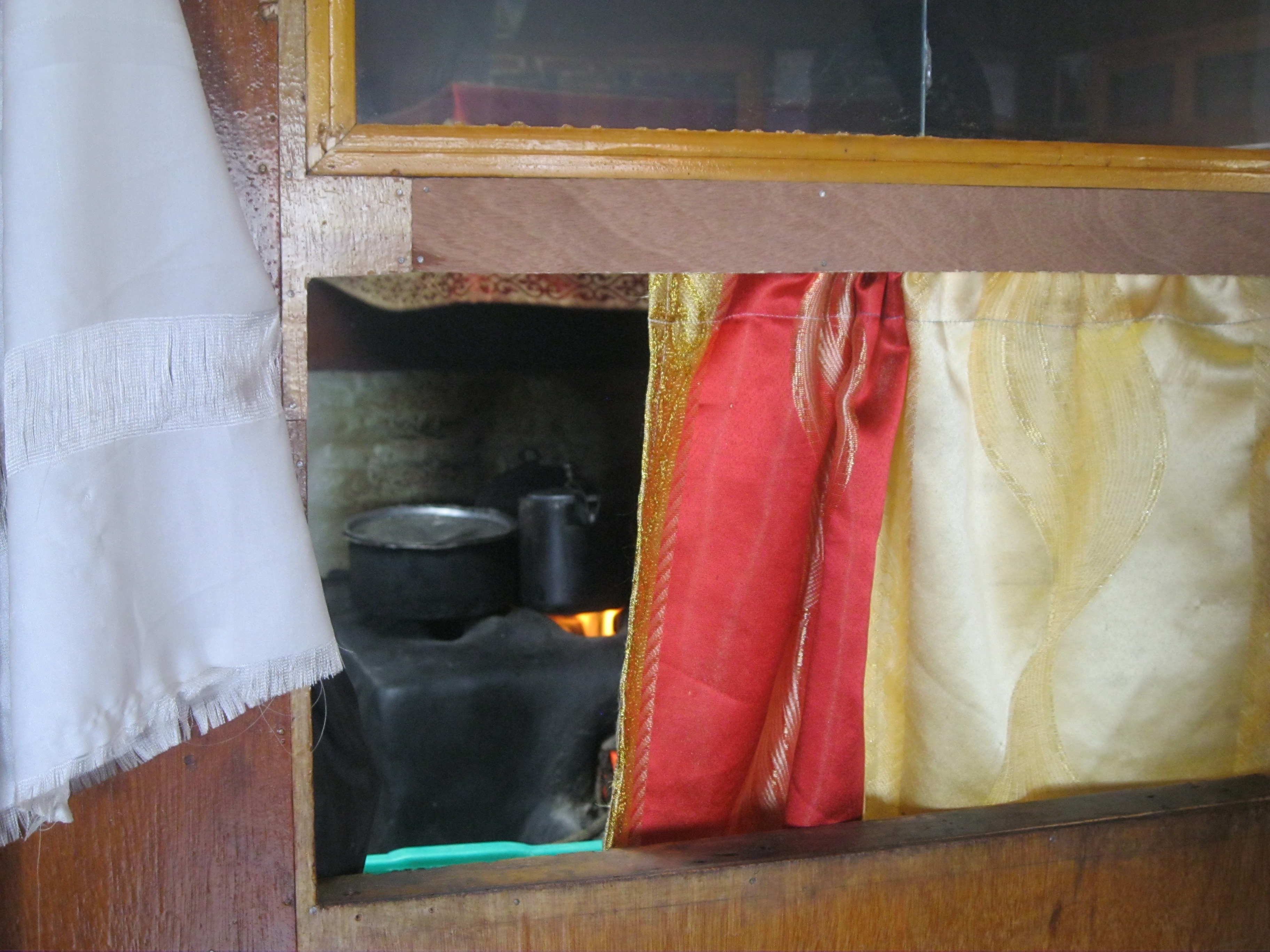
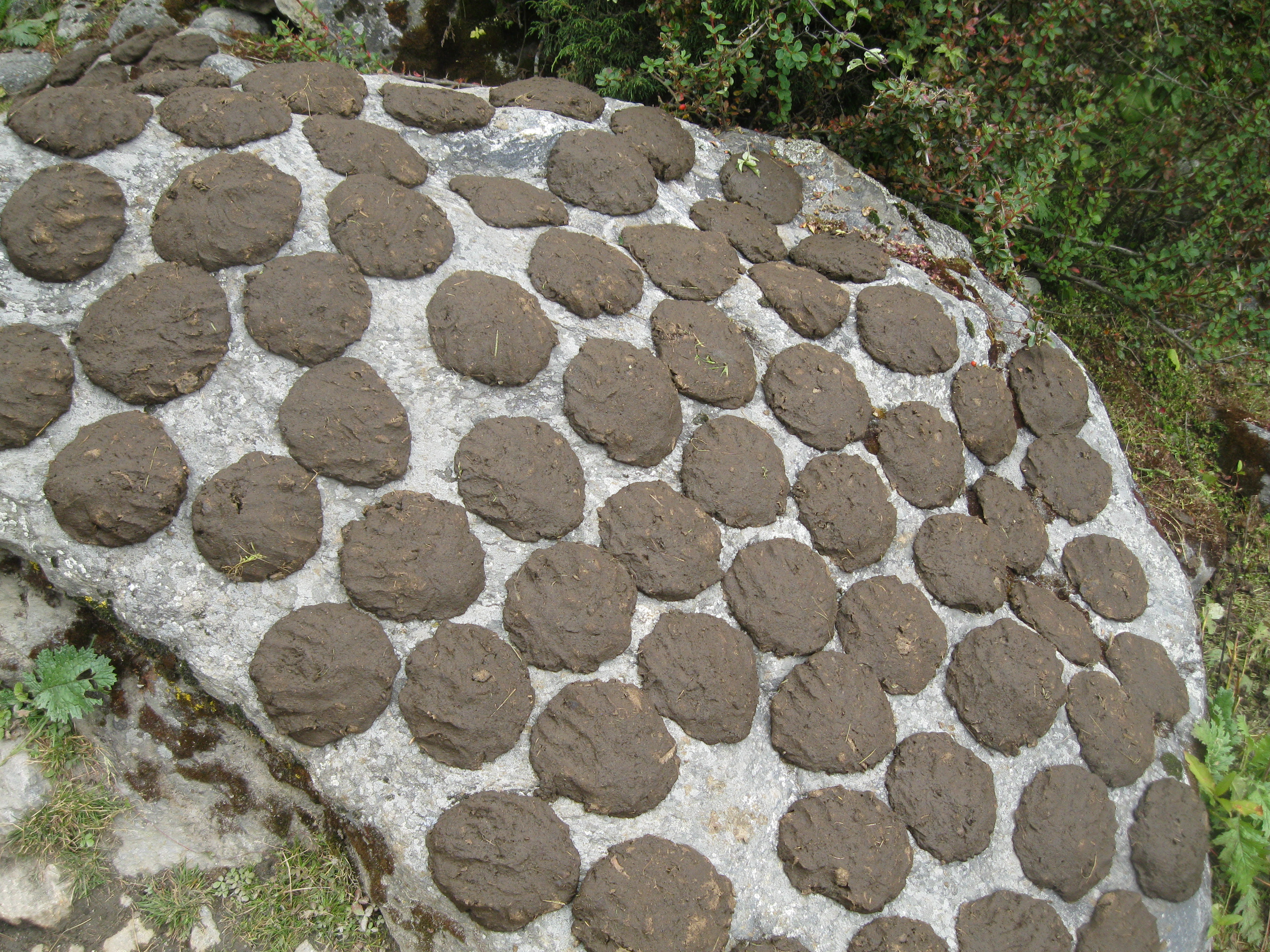
While doing this you hear some American-sounding English on your left and you just have to invite in that sweet sound with more conversation even if it is about sports. Four pm is the magic hour for the yak dung fire to be lit. You get that delicious Mad River Glen after-ski glow when your itchy wool hat can come off and you actually consider peeling your socks off your puckered white feet.
This is the time of the day, when people sit around, talk, play cards, which vary internationally with clubs called crosses and the queen of spades, the black bitch.
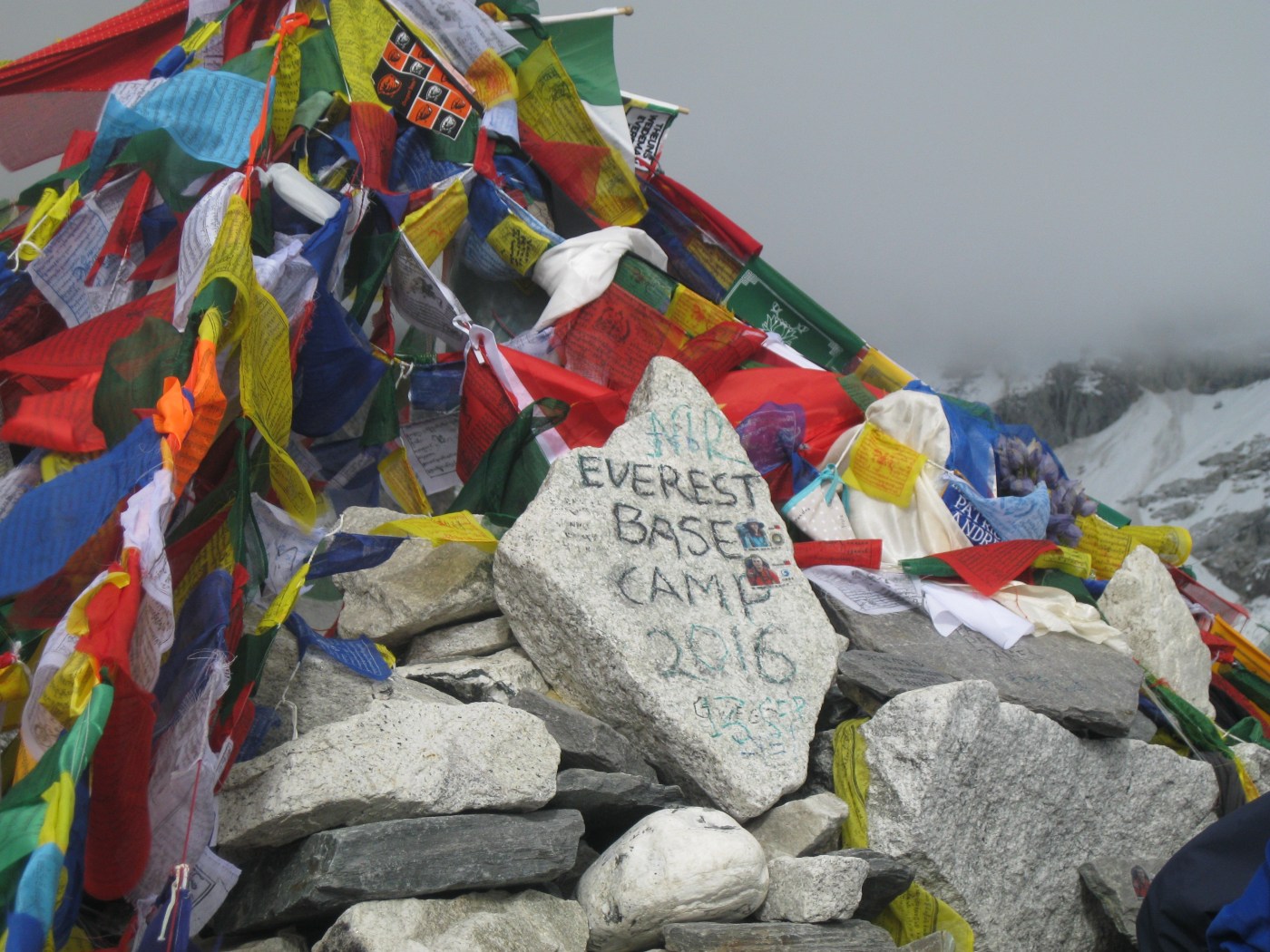
October 9, 2016 (Sunday) Lobuche to Everest Base Camp


After we sent two of our team off in a helicopter with AMS, I took our team leader aside and told him I could not make it to base camp. I could walk a little way, but then I needed a day before we moved on to the base camp. He seemed fine with that, and I knew it relieved Danya, who was more sick than I was. When we reached Gorak Shep (5,140 meters/16,863), I was clear about not making the now two-hour trek to base camp. I was so sick at this point I did not care. Since there was no sun, my sun treatment was no longer a remedy. It was easy for our team leader to convince me to make the two-hour trek to base camp. After all, I had come that far…
Making it to Everest Base Camp
The highlight of the Everest Base Camp was a little pink bird that did not want to fly. He was more beautiful and peaceful than the gigantic cairn where people took turns taking selfies and group photos for Facebook. I felt little pride or sense of accomplishment. The realization that I had to make a two-hour trek back to Gorak Shep heightened my anti-climax. I do not know why I thought there would be a teahouse waiting for us at base camp. We slogged our way back for two hours.
That night when I drew a thick blanket over my sleeping bag and tried to keep the blood pulsing in my temples at bay, I prayed, which is not what I do. I took the only prayer I know (the serenity prayer) and I repeated it to the rhythm of my pounding head.
Why?
By the time we reached the town below Gorak Shep, I looked at Danya and said, let’s ask for a helicopter. At this point, I was vomiting and walking at a snail’s pace. I wanted the relief of lying in the hospital, breathing thick air and pumping IV fluids into my veins until I felt better again.
I baby-stepped it to the next stop, repeating the serenity prayer the entire way. I do not think that I was accepting the things that I could not change, and at that point, courage was not a part of my vocabulary, and I had left my wisdom with the pink bird at Base Camp or somewhere before.
Irony
The great irony—you knew it was coming, didn’t you—was that we did the trek so quickly that we finished three days early. Our leader had followed a typical regimen for acclimatization, one that would fit most hikers. For some reason, it did not fit Danya and me. For the first time in my life, I was asking someone to slow down. For the first time in my life, I was the last one in line because I couldn’t move any faster.
This irony was lesson for me. Should we have gone slower? Maybe, maybe not. Altitude sickness is not something anyone can control or predict, it just happens. Two out of the six of us who started the trek showed no signs of it at all. They could have gone faster or slower and gotten altitude sickness, but they didn’t.
In the midst of feeling so horrible I wrote, adventures should be fun, not so ridiculously challenging that they make you sick. Trekking to Everest Base Camp challenged me beyond my capacity. It taught me how tiny I am in this universe of glaciers and rivers that start as tiny rivulets from a leaking glacier and turn into raging rivers to be crossed by swaying suspension bridges.

 we took a different path simply because it went down. The idea of going up was not something any of us was willing to do if we had a choice. Peri had gone ahead at his steadfast pace. Ganesan and I were staying with Danya who was sick with fever, vomiting, and delirium. I went ahead to relieve myself after a yak team passed by us, and that was the last I saw of my group for most of that day.
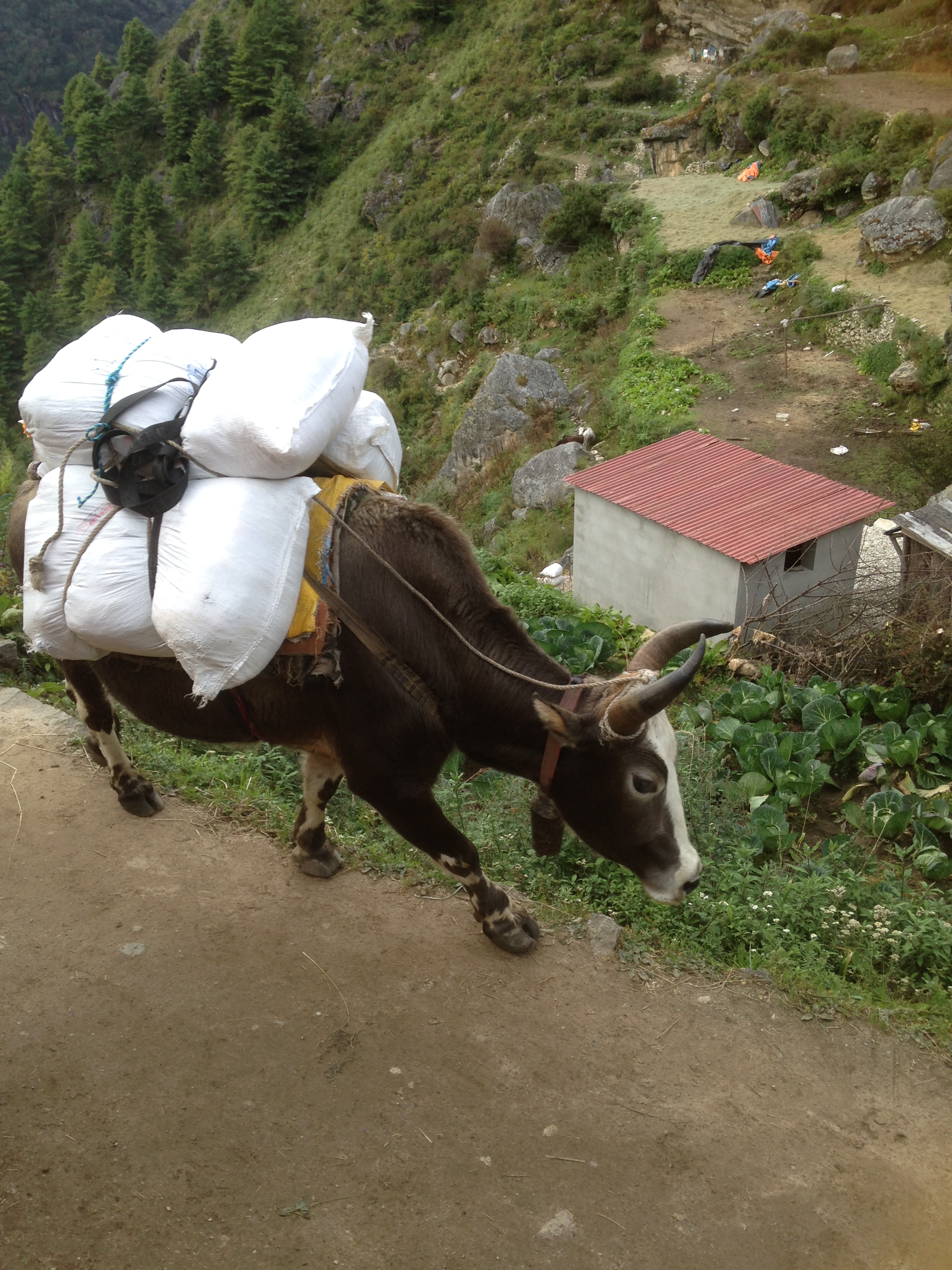
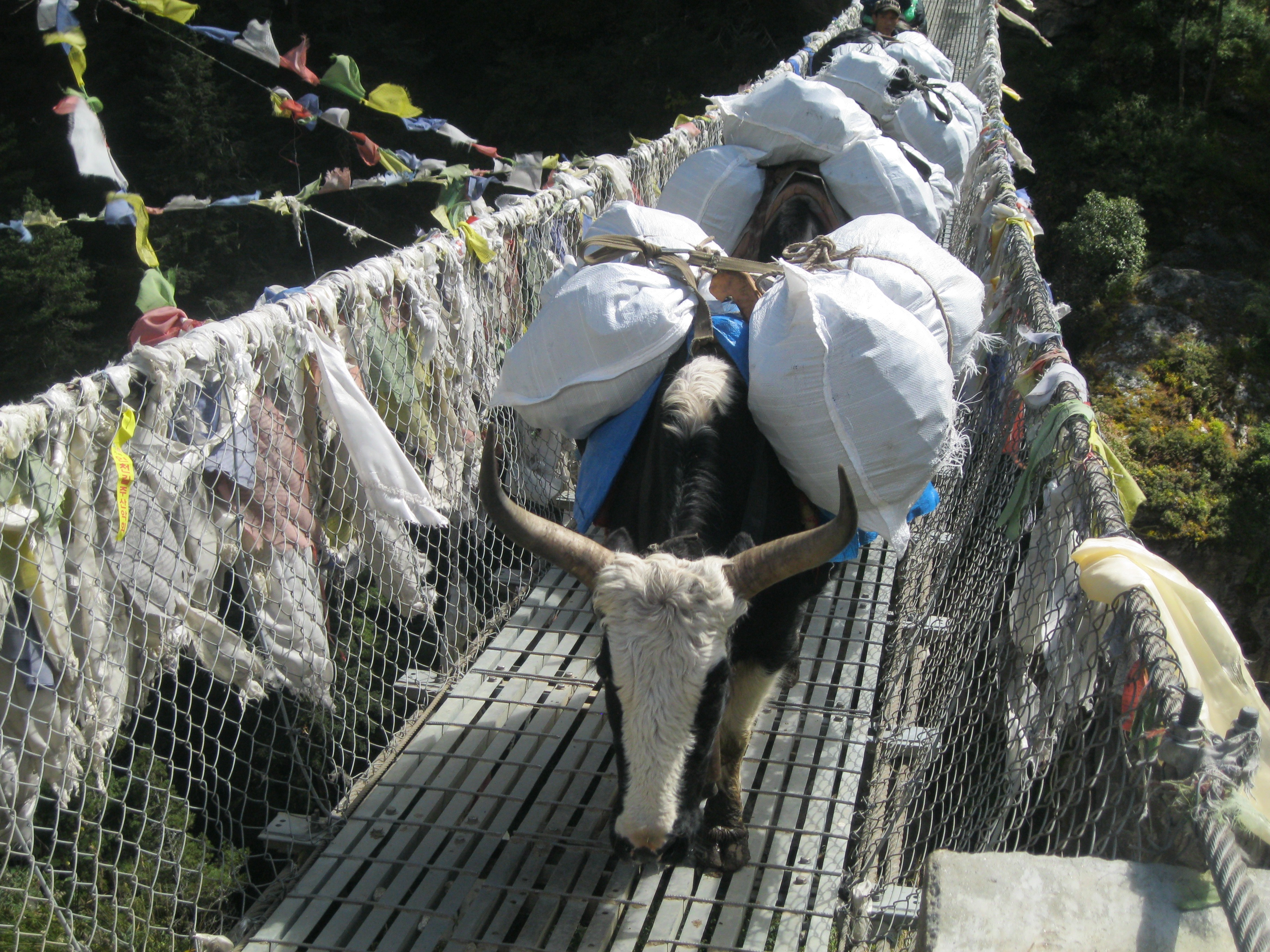 The trail was empty, which is unheard of, especially this far down when the faint-of-heart have not yet given up. I ran into one more yak team and their driver, which did not surprise me because I was walking in a mire of Yak shit. I ran into an Australian coming from Lukla, so I knew I would eventually end up in the right place.
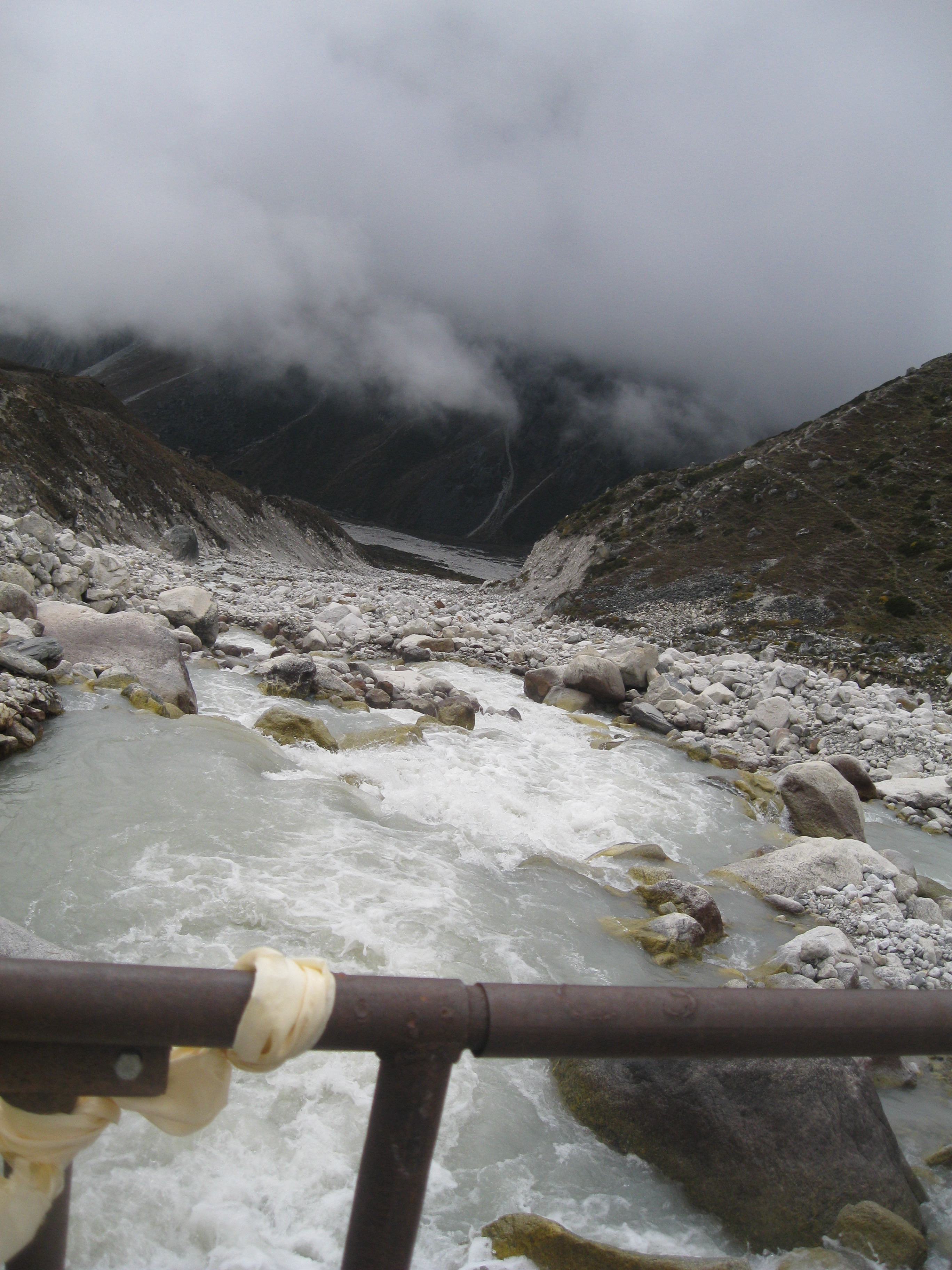
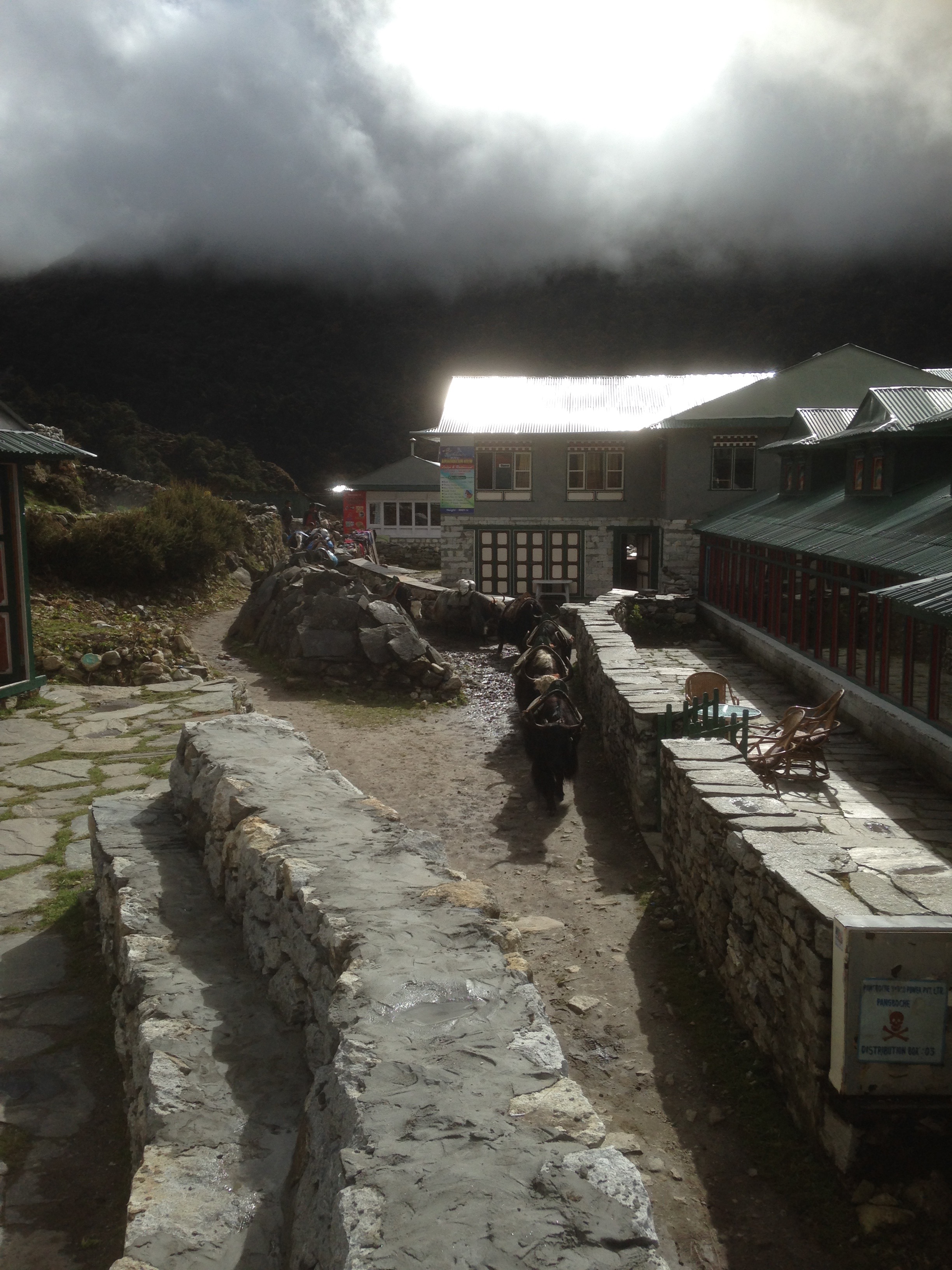 Yaks have the right of way—always. When a team of them approached me while I sat on the wall drinking milk tea, I dodged into the doorway so as not to be pushed off of my perch. The head yak stopped to take a lick out of the sugar bowl next to my tea. I threw an almond at it to get it to move on with little effect. With a whistle from his master, the yak moved on without getting a sweet taste of my tea.
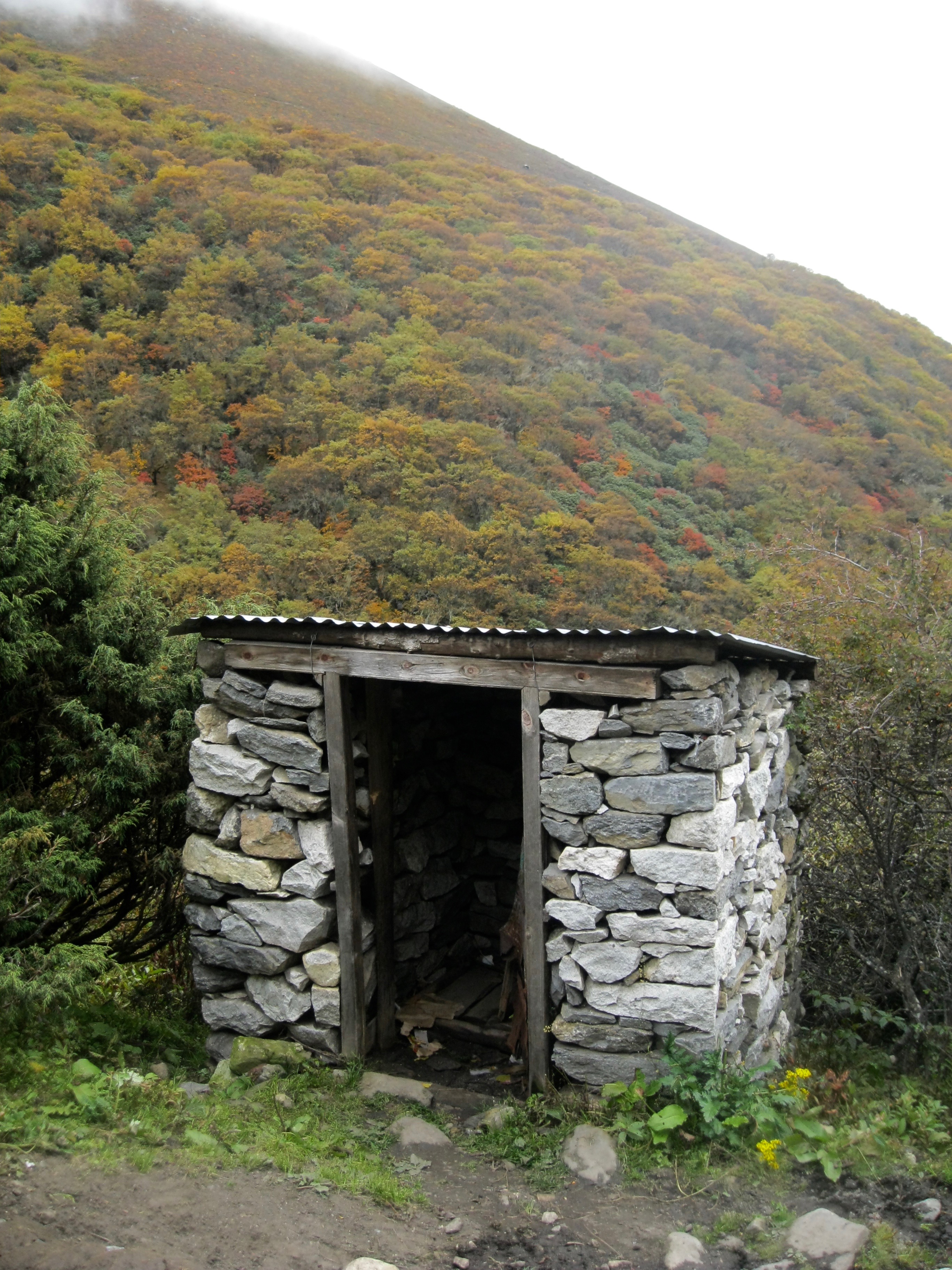
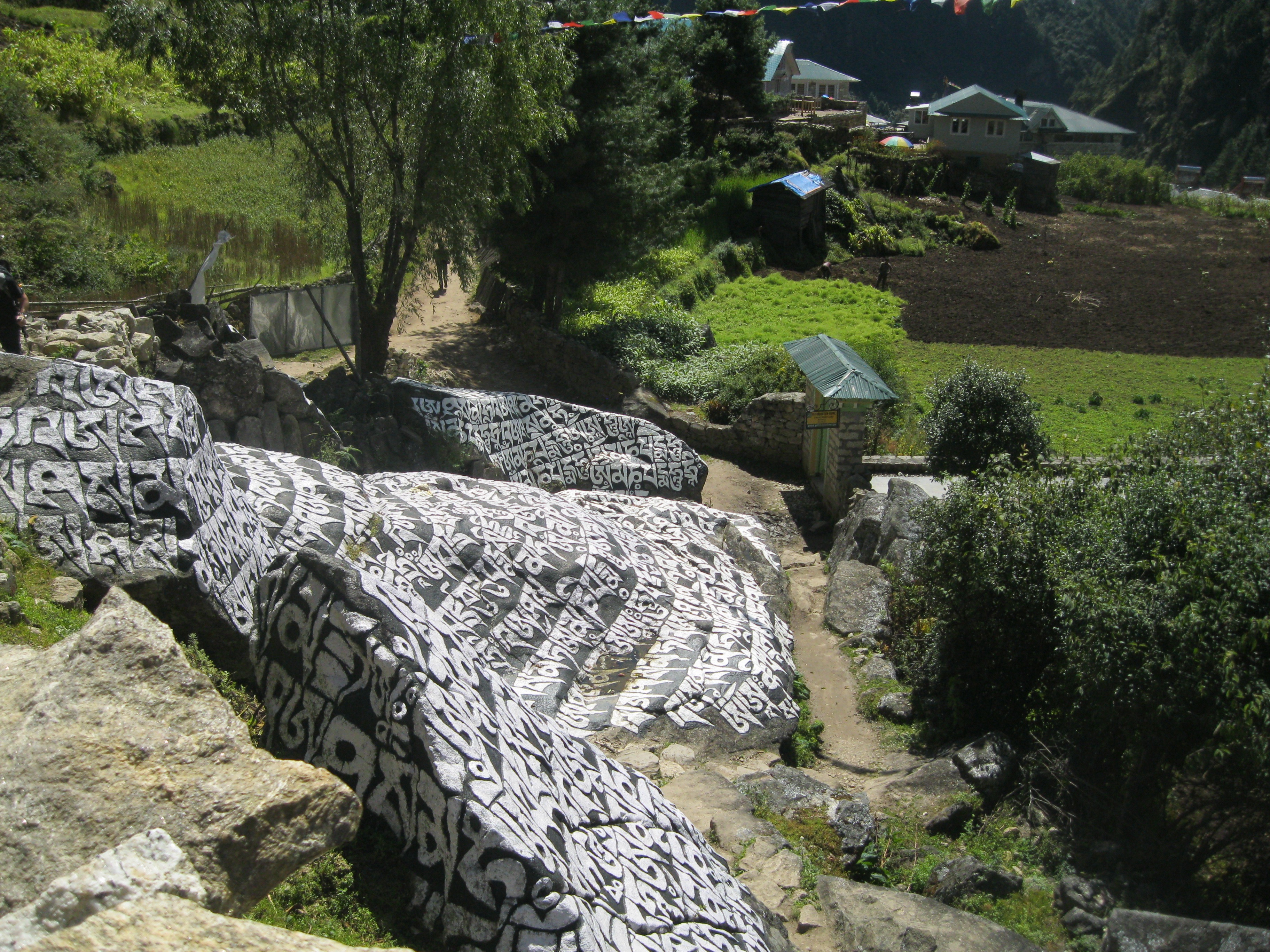
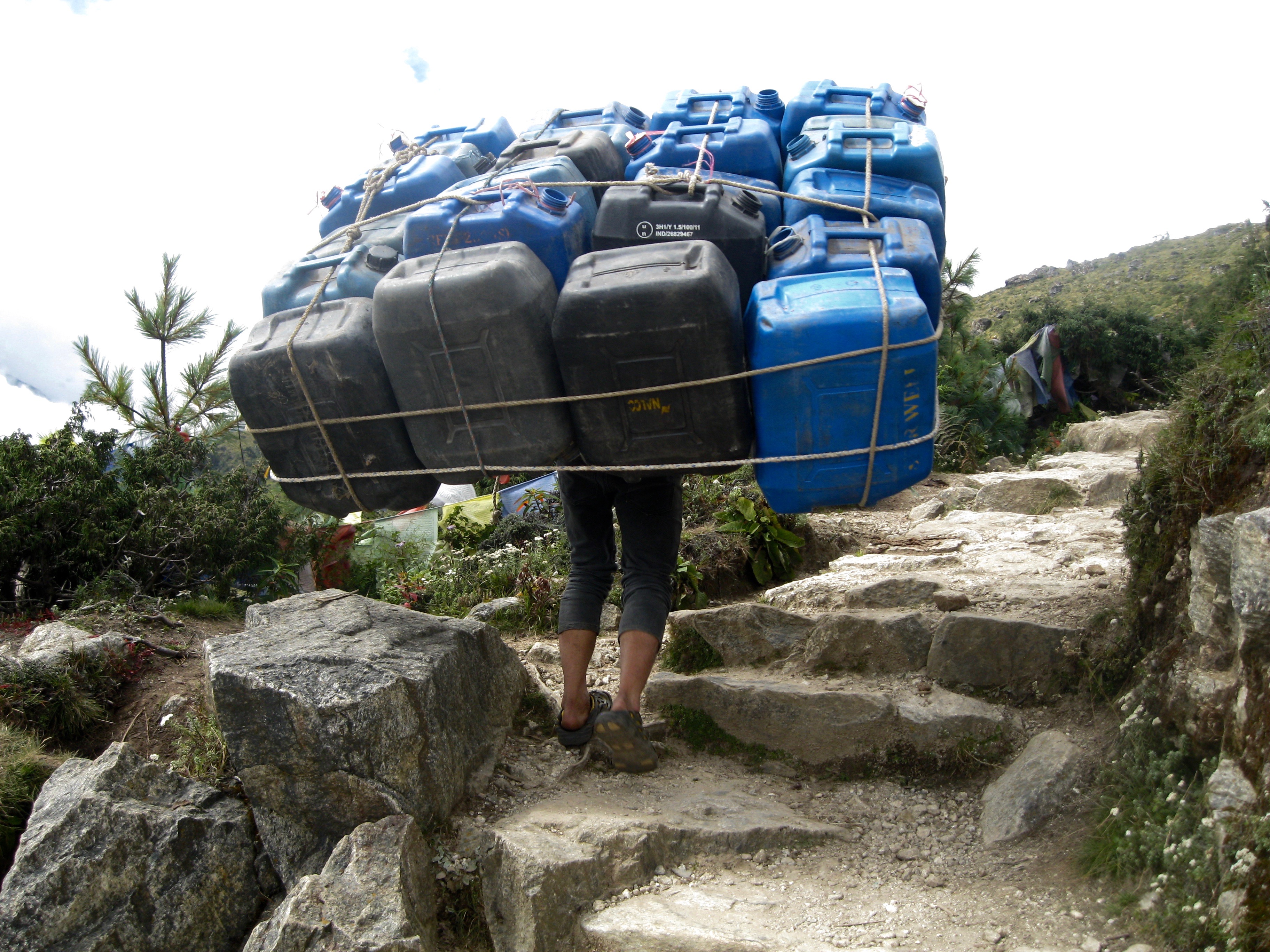
 It felt good to breathe more easily with each meter that I descended. I danced across suspension bridges without trepidation, managed to piss without hitting my shoes or socks, made way for yaks and porters. I experienced my journey in reverse.




 We all agree that if I take off my shoes, the smell will ruin the perfection of this quiet rest, so I park them outside to wait for me there.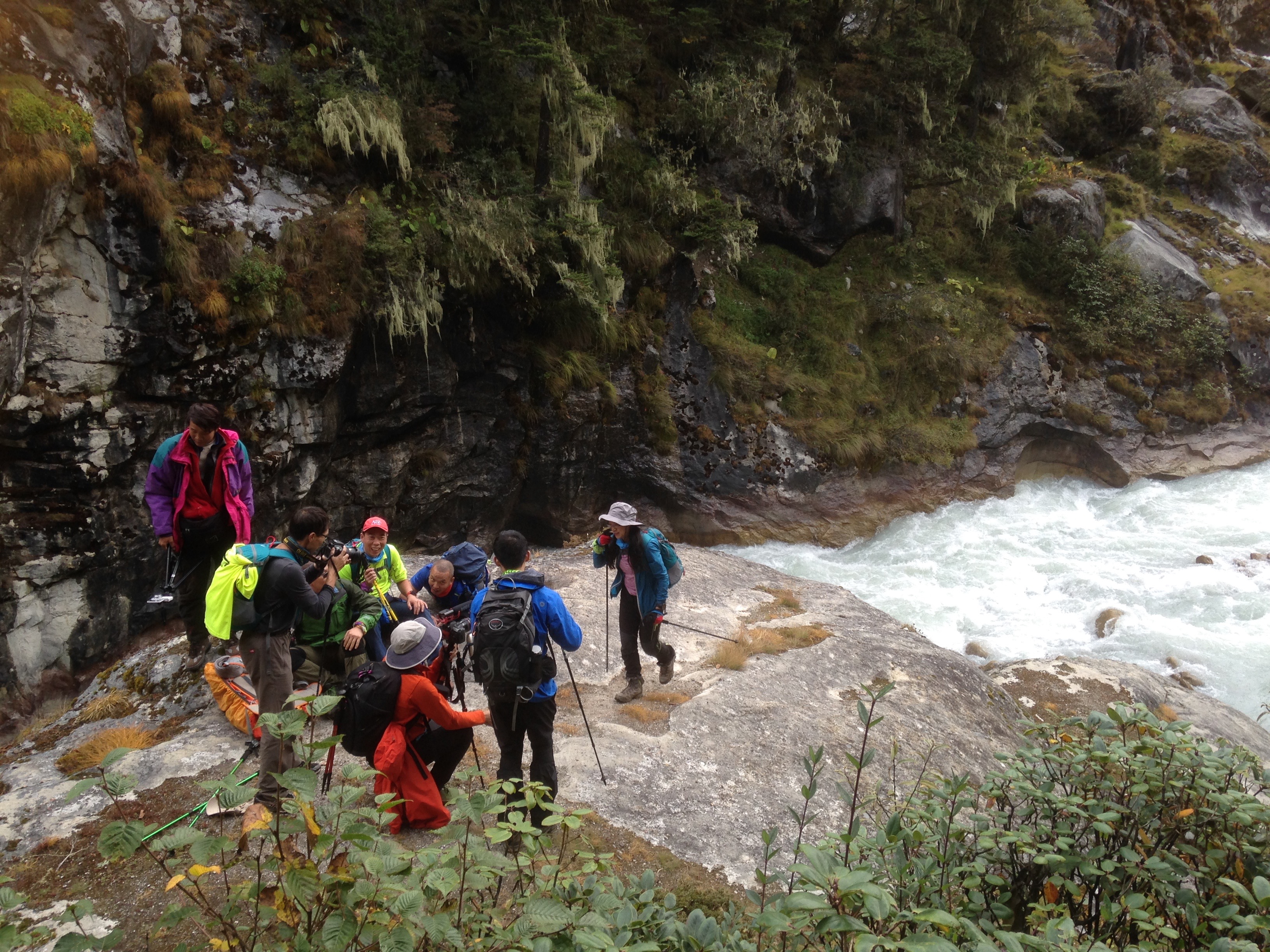






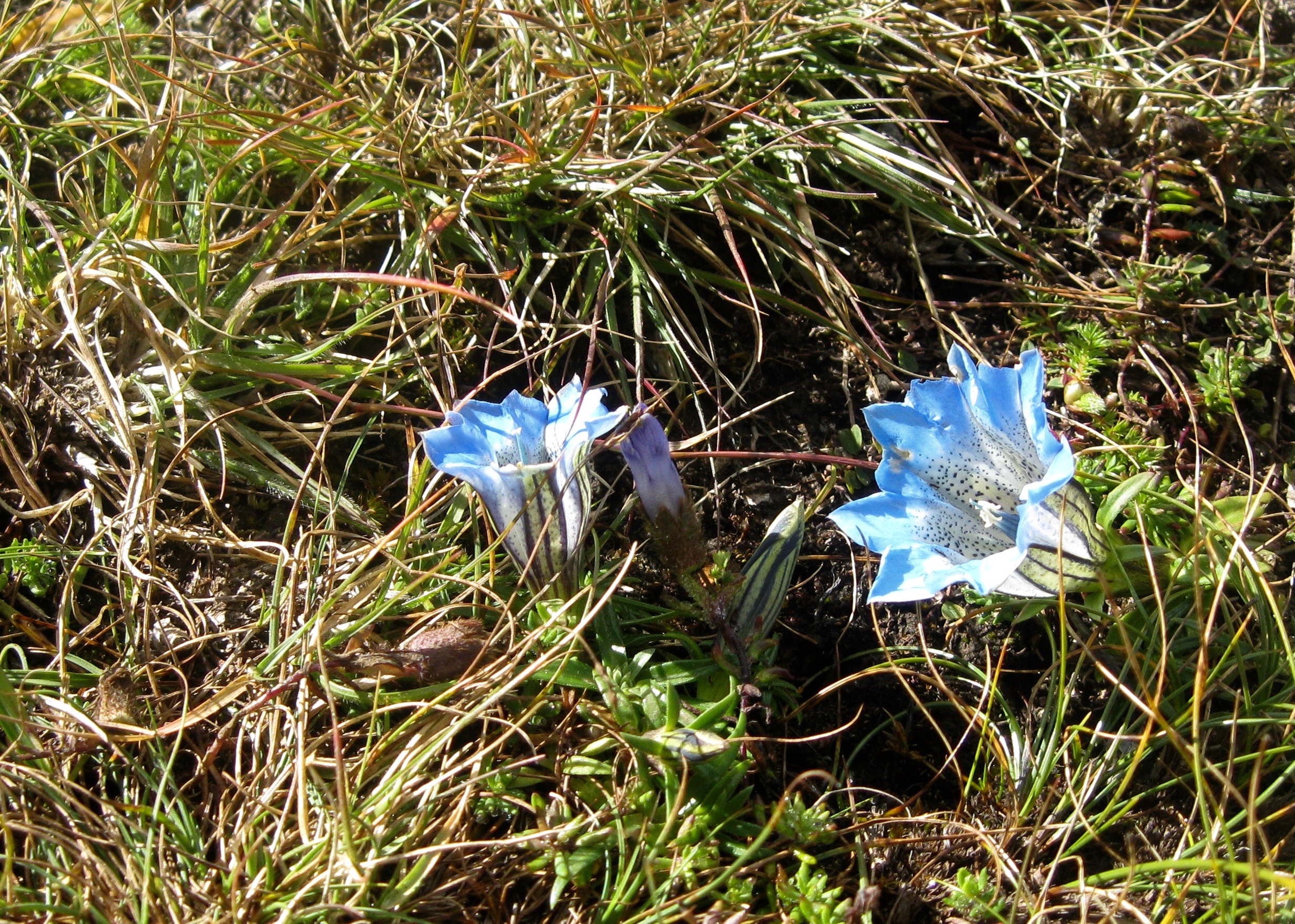 The trees got low and sparse leaving room for bluebells and fire red leaf flowers to grown. The snow-capped mountains seemed to get bigger and higher with every step that we took. Occasionally, a gust of wind revealed a rock-faced mountain so high that it was hard to tell whether or not is was a part of the sky itself. The sky was true azure and the quiet was as soft as the air was fresh. I felt the steady nature essence that never ceases to center me — so close to the mountains and sky that I could touch them if I stretched my soul far enough. My lungs burst wide open to let the hollow space inside of me leak out slowly while the clouds brushed up the mountainside.


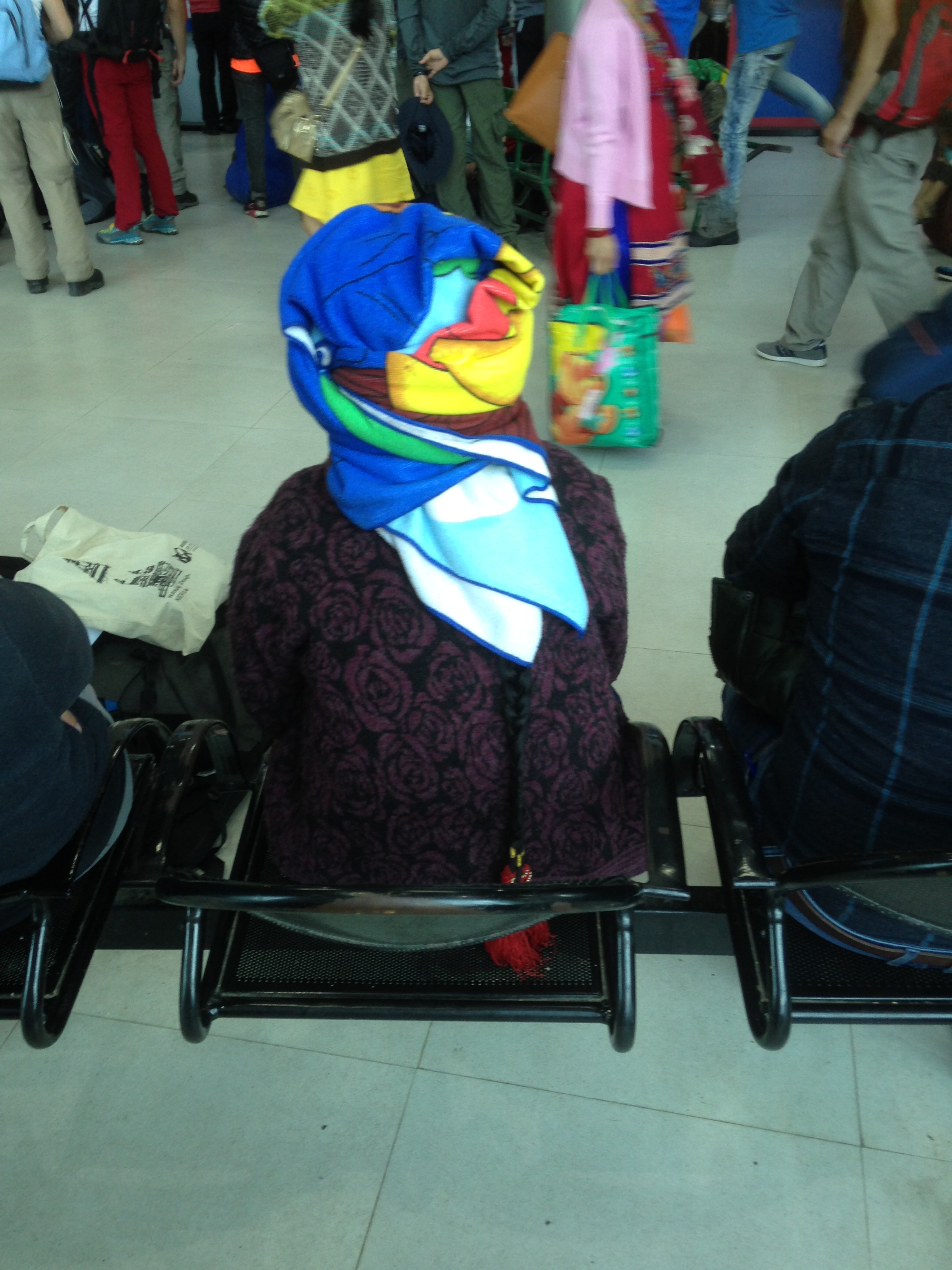
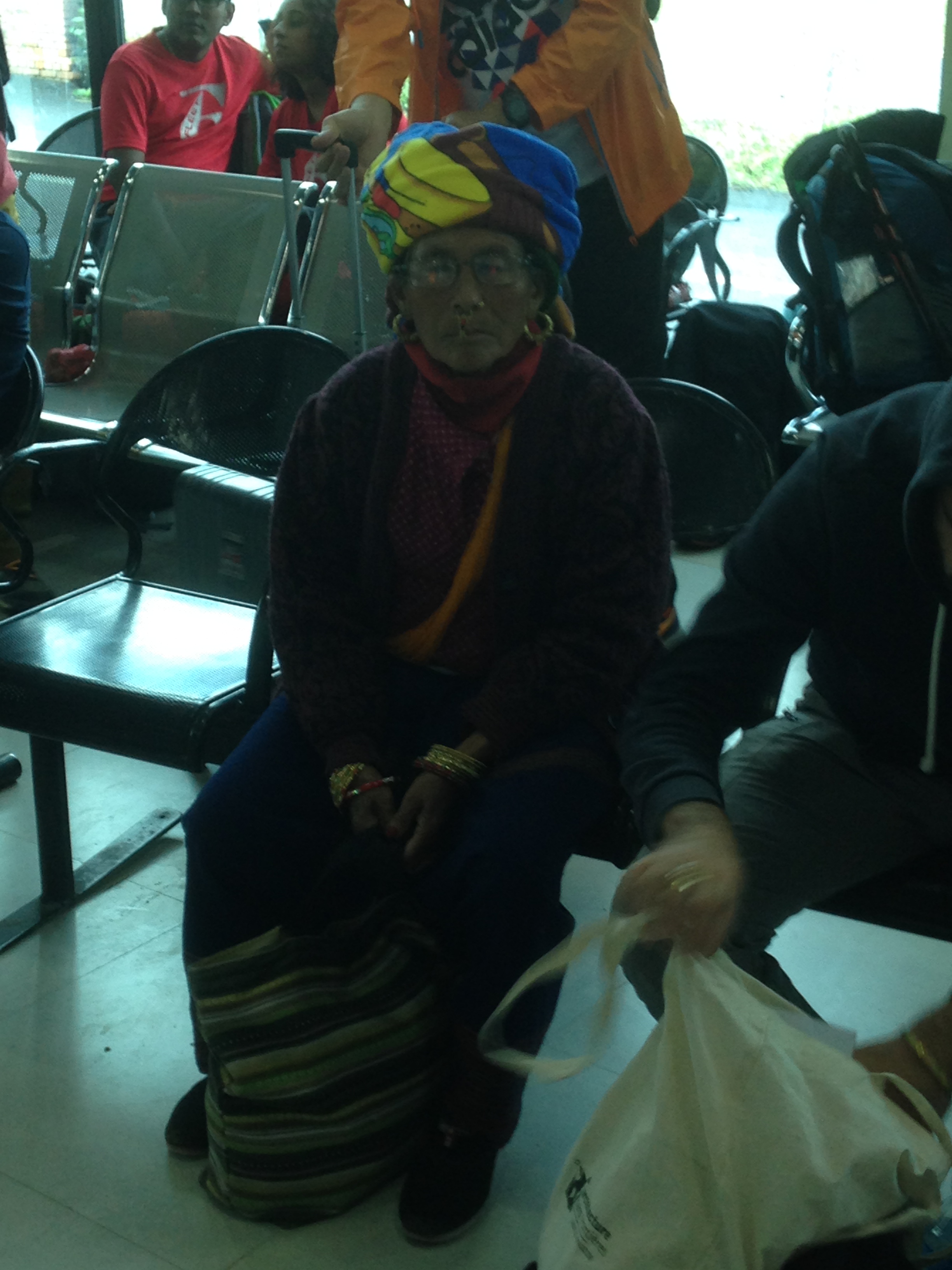
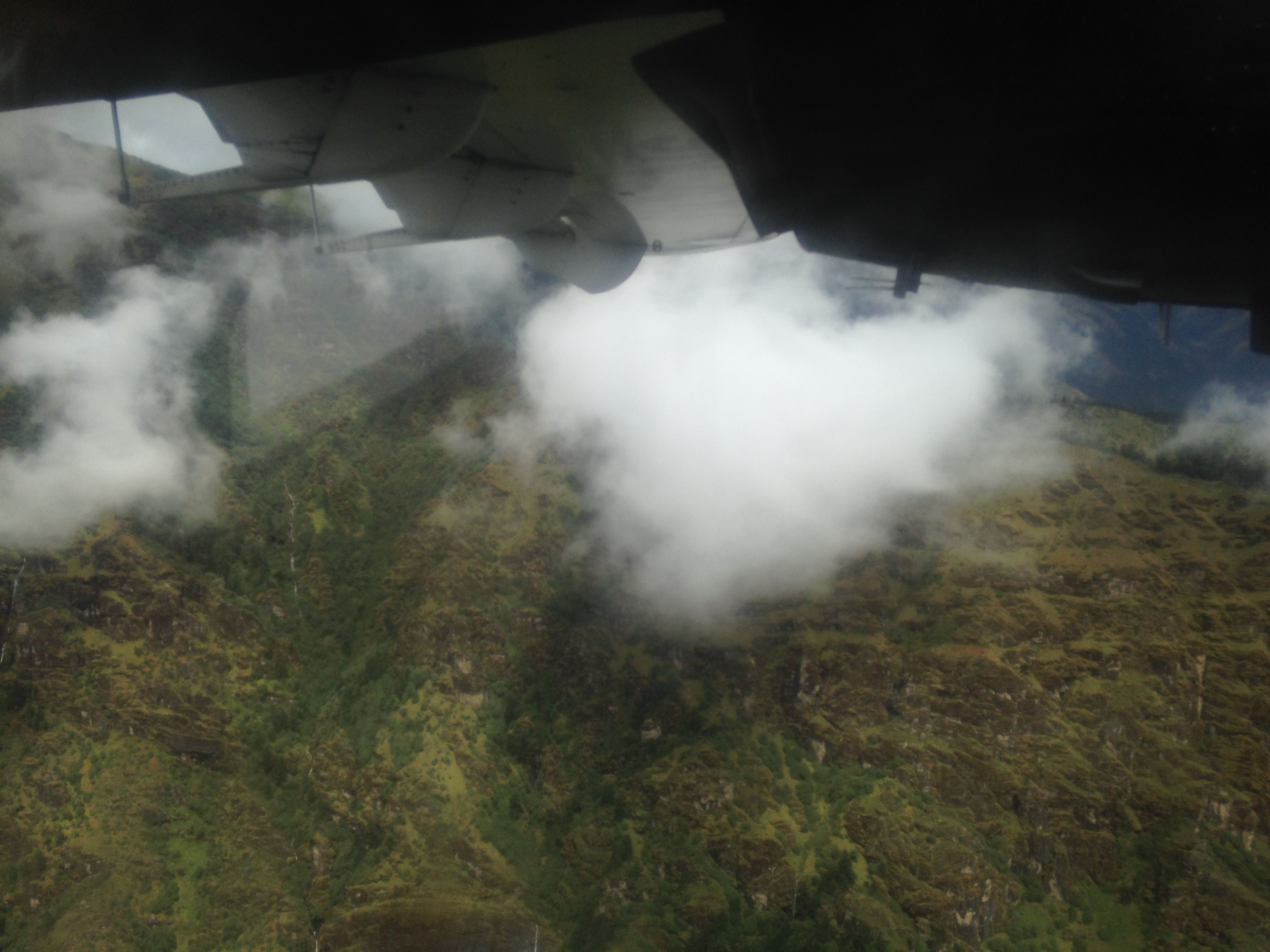
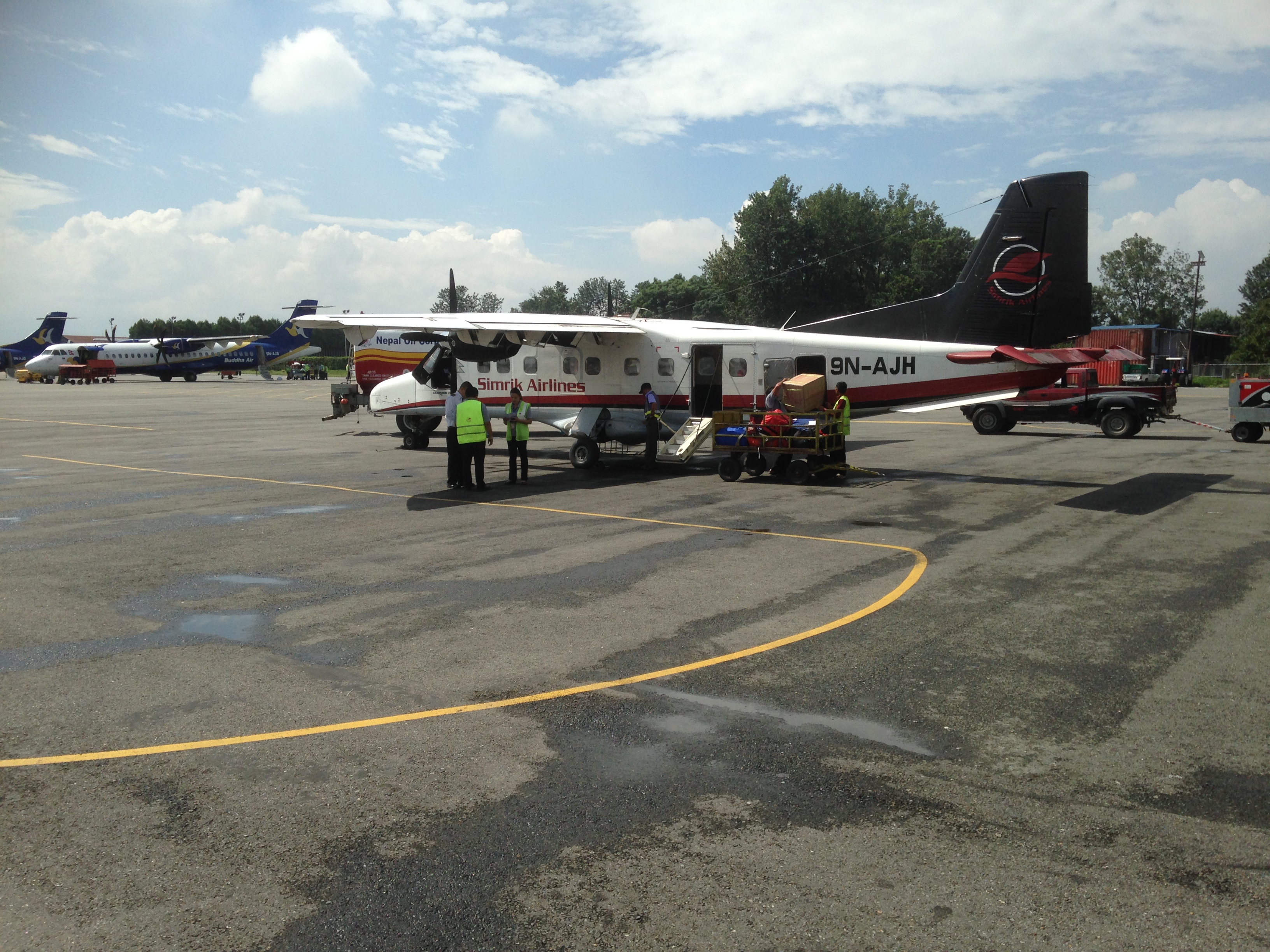 Then 16 of us were loaded onto a tin bus and driven out to the runway where several two prop planes waited. “Twenty minutes,” the lady in charge told us, “stay on the bus.” It wasn’t Malaysian heat, but it was pretty close. Soon we leaked off the bus like fried eggs, eager to hop into the frying pan. I quickly found a place to pee amidst some broken down airplanes, and this would probably be my most luxurious toilet experience over the course of my journey.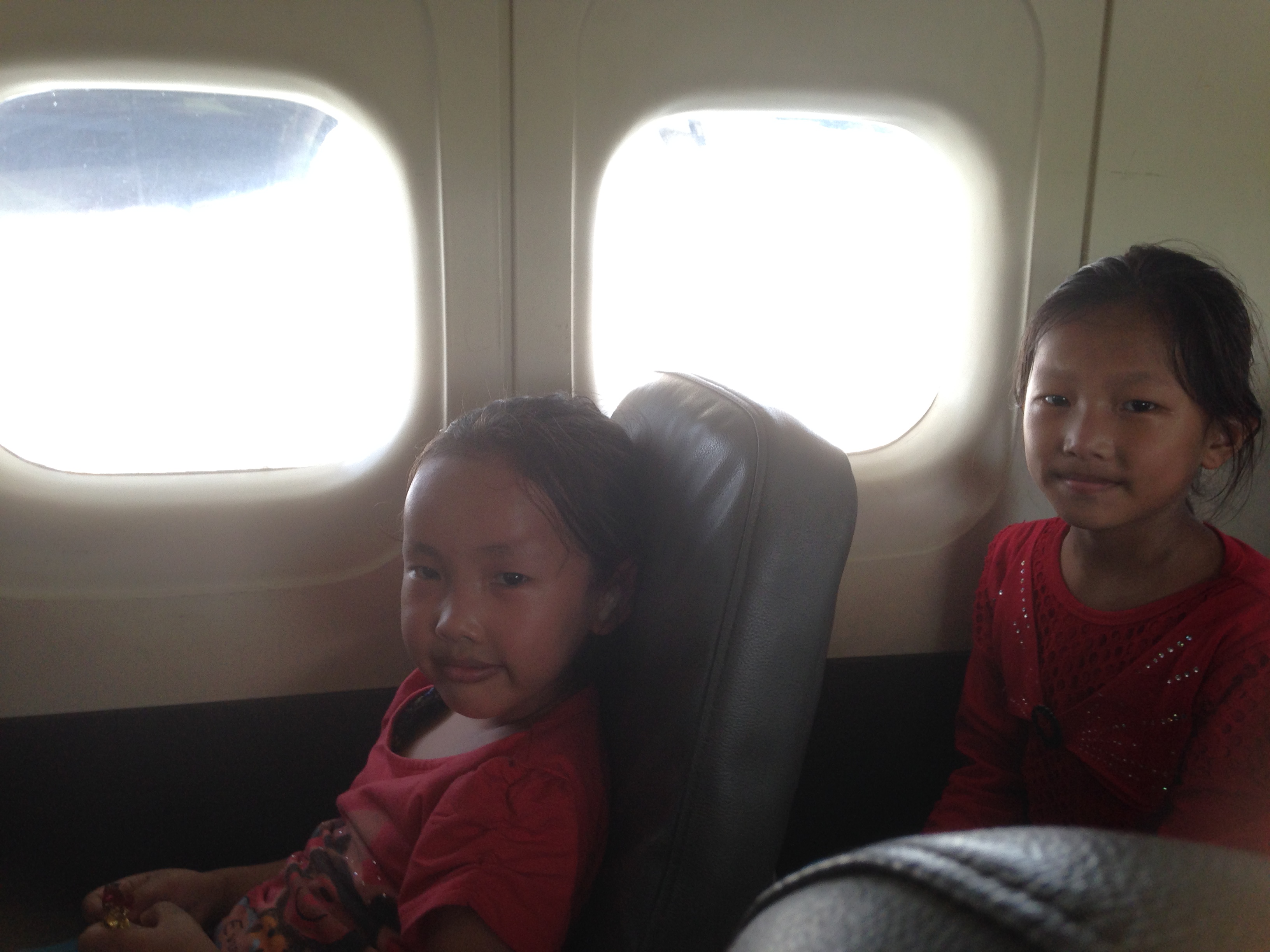
 There were two Germans sporting bow ties. One wore wool-blend stretchy light blue pants held up high above his waist with suspenders and a matching coat. The other sported a wool scarf. I break into a sweat, simply describing them. I pegged them for teachers. I ran into them later on the trail at one of the earlier stops. I am not sure they had any idea what they were getting themselves into.

 The week before I left on my trek to Everest Base Camp, I was banned from going on the trip; my passport was still at immigration; I did not have my visa for Nepal (which was okay, but I wanted it in my hand when I boarded the plane), and finally, I was sure that I was about to lose my job. I was a wreck, ready to come home, give it all up.
 Another glitch in the preparation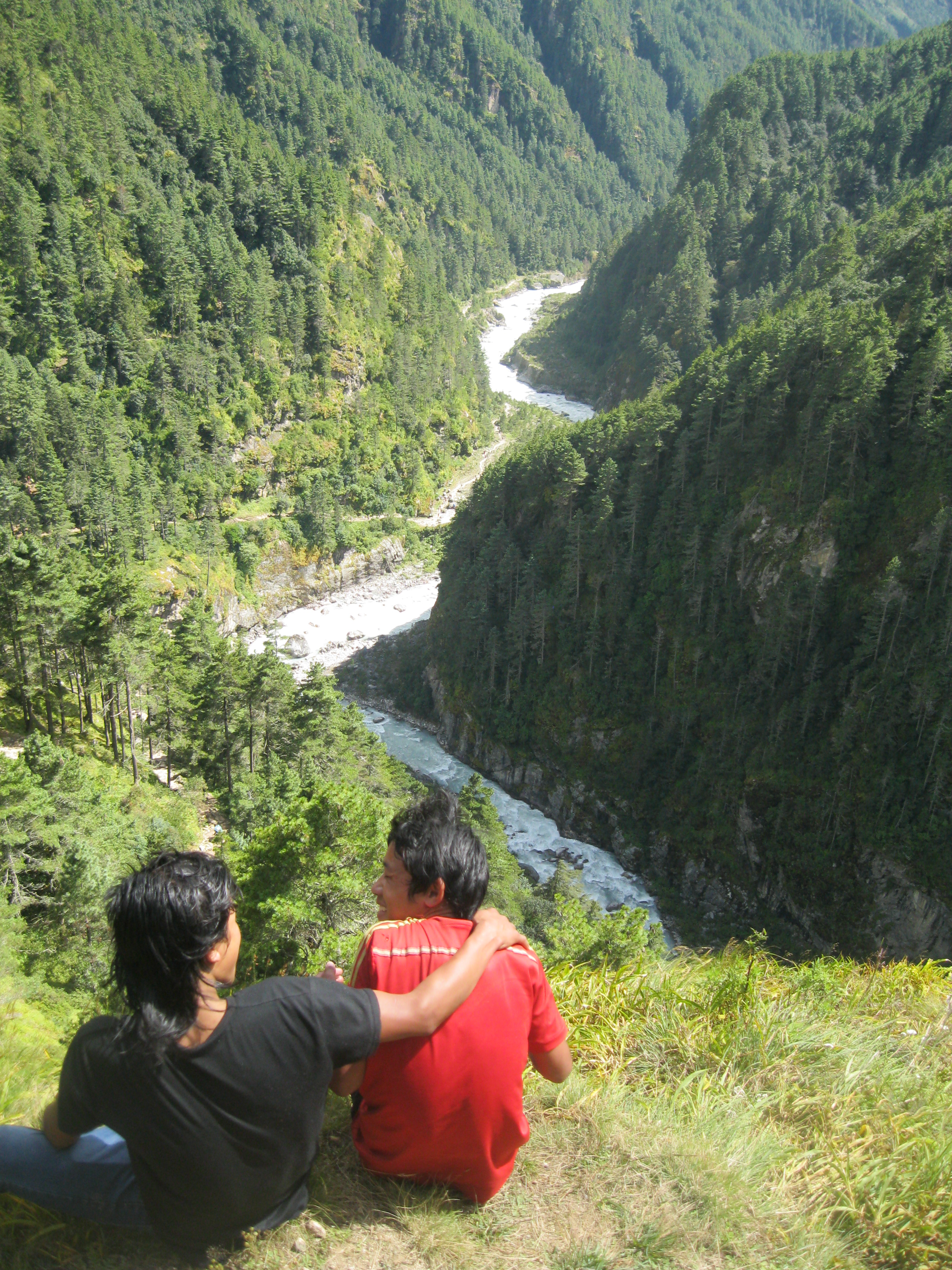

 Expatriate in Kuala Lumpur - a woman's walkabout - Elizabeth Goodhue
Recent Comments